
Why Do Refiners Turn to Opportunity Crudes When Prices Rise?
Many refiners respond to elevated crude prices by increasing feedstock flexibility. Lower-cost opportunity crudes, heavier grades, and unconventional feedstocks can improve crude sourcing economics and help protect margins. However, these feedstocks often contain higher concentrations of contaminants and corrosive species, creating operational challenges that must be effectively managed before they impact refinery performance.
How Does Chlorine Contamination in Crude Oil Threaten Refinery Reliability?
Among these contaminants, chlorine remains a major concern. Chlorine can contribute to corrosion in crude distillation units, overhead systems, and downstream process equipment, leading to increased maintenance costs, reduced unit availability, and unplanned downtime. When crude costs exceed $100 per barrel, the financial consequences of corrosion-related failures become even greater because every lost barrel carries higher value.
What Other Contaminants Affect Opportunity Crudes?
However, chlorine is rarely the only challenge. Many opportunity crudes and unconventional feedstocks also contain elevated levels of sulfur, nickel, vanadium, calcium, and other contaminants that can damage equipment, poison catalysts, and reduce overall refinery efficiency. The ability to rapidly characterize these contaminants is essential for safely expanding feedstock flexibility while protecting refinery assets.
The challenge for many refineries is not simply obtaining elemental data, but obtaining it quickly enough to make operational decisions. A contaminant result delivered hours later may confirm a problem, but it does little to help a refiner evaluate an incoming cargo, adjust a blend, or identify a potentially corrosive feedstock before it enters the process. In today's market, rapid information creates value.
How Can Elemental Analysis Help Refiners Manage Feedstock Risk?
Accurate elemental analysis helps refiners identify risks before feedstocks enter the refinery. Clora® R Series and Clora® 2XP R provide rapid total chlorine measurement for crude oils and refinery streams, delivering results in as little as five minutes. With a simple workflow and minimal operator training requirements, refinery personnel can quickly determine whether a feedstock poses a corrosion risk and make informed decisions while there is still time to act.
For difficult crude samples, Clora® AccuFlow™ extends these capabilities through a patented dynamic sample introduction system that continuously pumps crude oil into the measurement cell. By minimizing issues associated with particle settling and sample heterogeneity, refiners can obtain reliable chlorine measurements on challenging crudes without sacrificing the speed needed for operational decision-making.
Which XOS Analyzers Support Multi-Element Feedstock Characterization?
For refiners seeking a broader understanding of crude quality, Petra® MAX provides rapid multi-element analysis, measuring sulfur, chlorine, calcium, nickel, vanadium, and other critical elements that influence corrosion, catalyst life, and unit performance. Results are available in approximately five minutes, giving operators a comprehensive view of feedstock quality fast enough to support crude acceptance, blending, and processing decisions.
Sindie® + Cl complements these measurements by providing simultaneous sulfur and chlorine analysis in a single test. Rather than waiting for multiple analyses from different instruments, refiners can obtain critical contaminant information in minutes, helping laboratories improve throughput while providing operations with the data they need sooner.
Related: Ultra Low Sulfur Analysis in Liquid Petroleum Using MWDXRF
Product Highlight: Clora 2XP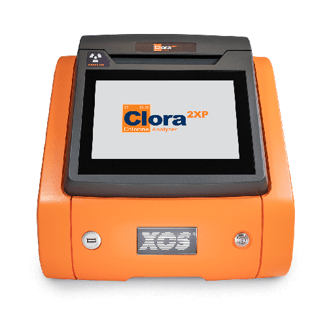
Analyze Total Chlorine with Unmatched Analytical Performance
Easier to use than ever, Clora 2XP analyzes total chlorine in liquid hydrocarbons such as aromatics, distillates, heavy fuels, and crude oils, as well as aqueous solutions, while automatically correcting for sulfur interference.
The enhanced precision and performance technology makes it the ideal choice for testing related to catalyst poisoning in reformers or for sites with fluid catalytic crackers and hydrocrackers monitoring very low chlorine levels.

The Bottom Line: Feedstock Flexibility Requires Contaminant Monitoring
As crude prices remain above $100 per barrel, feedstock flexibility can deliver significant economic benefits, but only when refiners can rapidly assess feedstock quality and risk. The ability to characterize chlorine, sulfur, metals, and other contaminants in five minutes rather than hours allows refiners to act with confidence, evaluate a wider range of crude opportunities, and respond faster to changing market conditions.
When every barrel is more valuable, every decision matters. Easy-to-use XOS analyzers deliver actionable elemental analysis in as little as five minutes, which is often much faster than alternative methods. This helps refiners make faster feedstock decisions, protect critical assets from corrosion and catalyst poisoning, and maximize profitability in a high-price crude environment.

About the Author 
Nick Nugent is a Regional Sales Manager at XOS with over 17 years’ experience in X-ray technologies, including extensive expertise in XRF applications and commercialization across EMEA. Nick combines deep technical knowledge with strong business development and channel management experience. He is an active member of the Energy Institute’s (IP) elemental analysis technical committees, contributing to industry standards and best practices.
Frequently Asked Questions
What is chlorine contamination in crude oil?
Chlorine contamination in crude oil refers to the presence of chloride species, both organic and inorganic, in crude feedstocks. These chlorides can convert to hydrochloric acid during processing, driving corrosion in crude distillation units, overhead systems, and downstream equipment.
Why is chlorine measurement more important with opportunity crudes?
Opportunity crudes and unconventional feedstocks often carry higher and more variable chloride levels than conventional grades. Measuring total chlorine before these feedstocks enter the process helps refiners anticipate corrosion risk, protect assets, and avoid unplanned downtime.
How is total chlorine measured in crude oil?
Total chlorine in crude oil can be measured rapidly using X-ray fluorescence analyzers such as Clora® and Clora® 2XP. For difficult, heterogeneous crude samples, Clora® AccuFlow™ uses a dynamic sample introduction system to reduce particle settling and improve measurement reliability.
%20vs%20ICP%20(IP%20501%20%26%20IP%20621).png?width=600&height=323&name=Precision%20Comparison%20Case%20Study%20%E2%80%94%20Petra%20MAX%20(EDXRF%C2%AE)%20vs%20ICP%20(IP%20501%20%26%20IP%20621).png)

%20vs.%20XRF%20(D8252)%20for%20Ni%20and%20V.png?width=600&height=323&name=ASTM%20Crude%20Oil%20Proficiency%20Testing%20Program%20ICP%20(D5708B)%20vs.%20XRF%20(D8252)%20for%20Ni%20and%20V.png)