
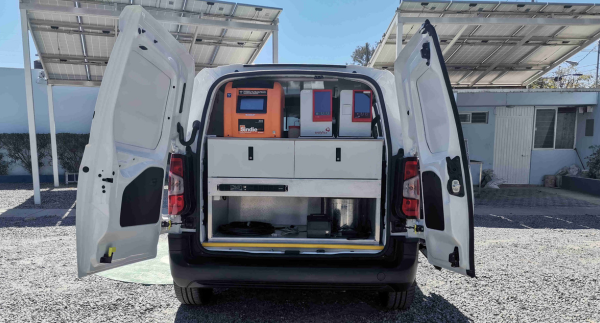
Across Latin America, regulatory agencies load sulfur analyzers into mobile laboratories and travel between cities and retail fuel stations to conduct point-of-sale compliance checks. Their goal is straightforward: verify that fuel sulfur levels meet regulatory limits before the product reaches consumers. The challenge is equally straightforward—precision analytical instruments must perform accurately in environments that are anything but controlled.
The Role of Mobile Labs in Fuel Sulfur Compliance
Sulfur regulations for fuel across Latin America have tightened in recent years. Governments are mandating ultra-low sulfur diesel and gasoline standards to reduce vehicle emissions and protect public health.
Mobile laboratories give regulatory agencies the flexibility to inspect fuel retailers across wide geographic areas. A single unit may visit multiple laboratories, collecting fuel samples and generating certified results on-site. Without this capability, enforcement agencies rely on self-reported data or infrequent fixed-laboratory sampling—both of which leave room for non-compliance to go undetected.
Environmental Challenges in Mobile Fuel Sulfur Testing
Scientific instruments are typically designed and validated under controlled conditions. Mobile fuel sulfur testing introduces a list of new variables:
- Temperature variation: A mobile lab can experience large temperature swings between a tropical coastal city and a highland capital within a single journey.
- Humidity: Many environments in the LATAM region bring high relative humidity that can affect instrument electronics and optical components.
- Elevation: Many major cities in the region sit above 2,000 meters, where lower atmospheric pressure can influence some analyzer technologies.
- Vibration: Poor road infrastructure and unpaved surfaces place mechanical stress on sensitive instruments during transit.
Each variable has the potential to shift an instrument's calibration, introduce measurement error, or delay testing until the analyzer stabilizes. For regulators on tight schedules, those delays mean fewer retail locations inspected per day.
.png?width=650&height=406&name=Mobile%20Labs%20-%20Blog%20Images%20(1).png)
Why Calibration Stability Matters
An instrument that requires frequent recalibration after each relocation—or that drifts with ambient temperature—creates compounding inefficiencies across a multi-city compliance campaign. Technicians lose time verifying and correcting calibration before each session, and some instruments need extended warmup periods after moving locations.
The consequences extend beyond lost time. Inaccurate sulfur measurements produce false compliance results: non-compliant fuel passes, or compliant fuel is flagged as a violation. Both outcomes harm lab credibility.
An analyzer with verified calibration stability removes this uncertainty. Agencies can proceed directly to testing upon arrival, confident their results are accurate regardless of where the mobile lab has traveled.
How Petra and Sindie Perform in the Field
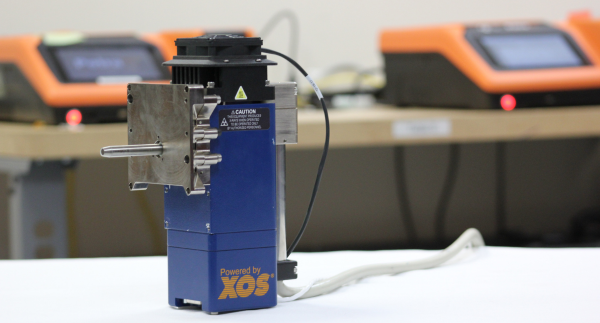
Both Petra and Sindie analyzers are engineered to maintain calibration stability across the variable conditions common to mobile laboratory use in Latin America. XOS has verified performance across a wide operating temperature range, and our customers use our instruments across a variety of humidity levels in addition to operating our analyzers at over 2000+ meters above sea level without issue.
This means a Petra or Sindie analyzer deployed in a mobile lab does not require recalibration each time the vehicle relocates. It maintains accuracy whether operating at sea level or at altitude. Both the Petra Series and Sindie R Series comply with various methods, ensuring results generated in the field carry the same regulatory alignment as those from a fixed laboratory with appropriate quality control charting.
Calibration stability also improves daily throughput. The Sindie R3, for example, achieves a limit of detection of 0.18 mg/kg at 300 seconds. Faster cycle times combined with immediate readiness allow technicians to process more samples and reach more locations per day.
Anti-Vibration Protection for Mobile Installations
XOS designed anti-vibration plates specifically to protect Petra and Sindie analyzers during road transport. These plates absorb mechanical shock from travel over varied terrain, reducing the risk of component misalignment, optical damage, or wear that accumulates over repeated transit cycles. An instrument that arrives at each new location mechanically sound—with calibration intact—keeps technicians focused on testing rather than troubleshooting.
Choosing the Right Analyzer
Both the Petra Series and the Sindie R Series address the core requirements for mobile fuel sulfur testing: verified calibration stability, regulatory method compliance, and purpose-built transport protection.
- Choose Sindie R Series for sub-ppm detection limits and compliance with ASTM D2622 or D7039.
- Choose Petra for multi-element analysis capability, including sulfur alongside metals and light elements.
Conclusion
In mobile fuel sulfur testing, calibration stability is not a convenience—it is essential to accurate compliance decisions, efficient field operations, and confidence in every result. For agencies operating across the varied climates, elevations, and road conditions of Latin America, analyzers must deliver dependable performance wherever testing takes place. With Petra and the Sindie R Series, laboratories gain application-specific X-ray analyzers designed to maintain accuracy in real-world conditions, helping teams move faster, inspect more sites, and safeguard fuel quality with confidence.

.png?width=600&height=323&name=Ensuring%20Euro%205%20Sulfur%20Compliance%20with%20Sindie%C2%AE%20R%20Series%20(1).png)