-
Analyzers
- Sulfur Analyzers
- Chlorine Analyzers
- Multi Element Analyzers
-
Parts and Supplies
Accessories PartsSupplies
- Service & Maintenance
- Optics & Sources
- Technologies
- Support
- About


Polycapillary X-Ray Optics
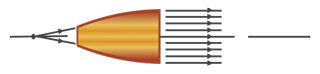
Collimating optic
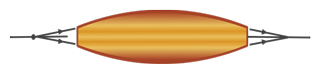
Focusing optic
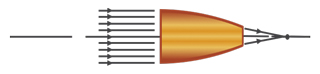
Half-focusing optic
X-rays can transmit through small capillary channels by multiple external total reflections. A polycapillary optic typically consists of sub-million to a few millions of small channels which are precisely shaped to allow efficient transmission of the X-rays.
For example, the use of polycapillary optics has dramatically increased the analytical speed of micro-XRF analysis, supplying accurate and reliable measurement results thousands of times faster than conventional approaches. Other important applications of polycapillary optics include confocal XRF, X-ray diffraction, and wavelength dispersive X-ray spectroscopy.
XOS is the world leader in the design and manufacturing of such optics. To achieve the maximum X-ray performance at any given X-ray energy, the curving profile of the polycapillary optic needs to be optimally designed and precisely manufactured. The computer-controlled manufacturing process makes it possible to achieve excellent performance consistency, which is critical for OEM applications. Learn More
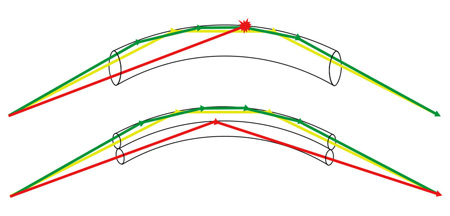
Polycapillary Optics at a Glance
- Small channel size is the key for efficient transmission of X-rays through curved capillaries
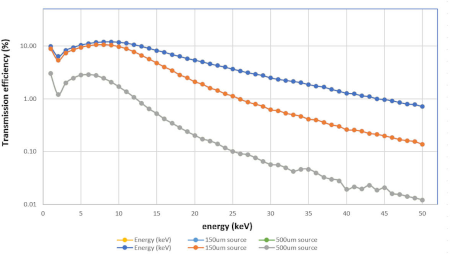
- The transmission efficiency of the optic varies with X-ray energy
- The optic's transmission efficiency strongly depends on the X-ray source size
Talk to an Expert
Product Highlight
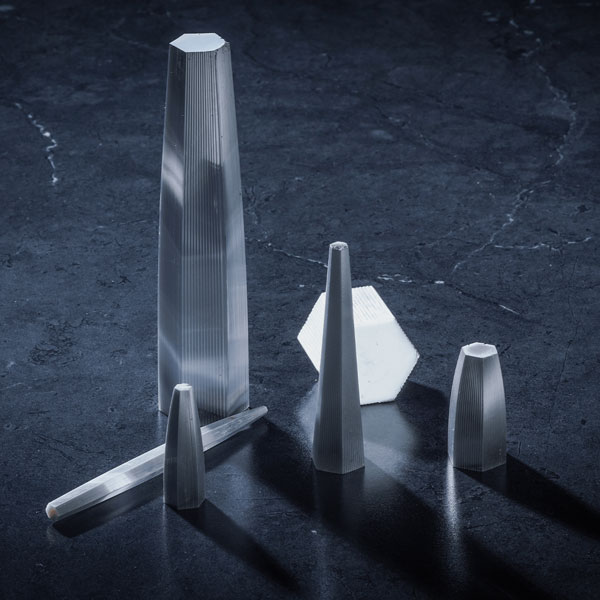
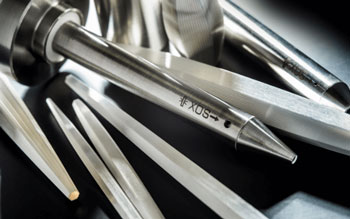
XOS Polycapillary Optics capture large, solid angles of X-rays and redirect them to a micron-sized focal spot or a highly collimated beam.
Features and Benefits
- X-ray flux density gain up to 10,000 times greater than conventional pinhole collimator
- Focal spot as small as 5µm
- Broad spectral bandwidth: 10eV-50keV
- Significantly improved measurement speed for fine-feature analysis and high-resolution mapping
- Halo reduction optics optimized for high-energy applications
- Large, quasi-parallel X-ray beam for XRD and XRF
- Customized optic design for optimal performance
Applications
- Micro X-ray Fluorescence (μXRF)
- X-ray Diffraction (XRD)
- Confocal X-Ray Fluorescence (XRF)
- Parallel-beam Wavelength
- Dispersive Spectrometer (WDS)
- Synchrotron