-
Analyzers
- Sulfur Analyzers
- Chlorine Analyzers
- Multi Element Analyzers
-
Parts and Supplies
Accessories PartsSupplies
- Service & Maintenance
- Optics & Sources
- Technologies
- Support
- About


Rapid & Accurate Analysis Solutions for Sulphur & Chlorine in Biofuels
Biofuels are renewable fuels produced from feedstocks such as vegetable oil (palm oil, corn oil, rapeseed oil & soybean oil), animal fat, used cooking oil, biomass, or a blend of these. They are not produced from fossil fuels but rather from contemporary, human-induced processes. Biofuels are often used for blending with traditional fuels such as gasoil. However, it is also possible to use biofuels without blending them with traditional fuels. All biofuels - blended or not - must meet certain sulphur regulatory limits. In addition, some biofuels contain fairly high levels of chlorine which can cause corrosion damage during and after the production stages.
ENSURE ACCURATE RESULTS WITH XRF
X-ray Fluorescence (XRF) delivers rapid and accurate results for testing sulphur and chlorine in biofuels, backed by international standard test methods (ASTM, ISO, etc.). Advantages of XRF technology include its nondestructive nature, easy sample preparation process, and quick results, in addition to accuracy that is on par with alternative technologies like UVF (ultraviolet fluorescence). Having the correct sulphur value for biofuels is critical as they are typically blended with fuels that have a maximum specification of 10 mg/kg for sulphur (15 mg/kg in the US). This is important to note because oxygen absorbs XRF signals and as a result, can cause analysers to report falsely low sulphur and chlorine concentrations.
XOS’ Sindie® and Clora® XRF analysers deliver rapid and accurate results with exceptional reproducibility for both sulphur and chlorine in biofuels without the need for a matrix-matched calibration by simply applying a correction factor to the results. This allows professionals to certify their biofuel products more efficiently than with other methods.
Request More Information
SULPHUR SOLUTIONS
Sindie Series
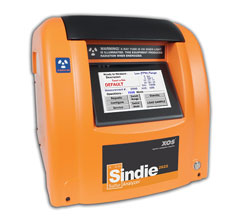
The Sindie Benchtop Series enables complete flexibility in sulphur analysis. Samples are measured directly, which means it can analyze hydrocarbons without the hassle of boats, injectors, furnaces, or changing detectors. No compromises in detection, performance and reliability — the ideal sulphur analytic solution from crude feedstocks and intermediates to low sulphur biofuels. Sindie +Cl has the ability to measure both sulphur and chlorine concurrently, making it the ideal solution to obtain rapid results in biofuels.
With the Sindie series you can achieve compliance with ASTM D2622 and therefore meet the regulatory limit of ASTM D6751 and ASTM D7467. These analysers are also compliant with ISO 20884 and can therefore be used according to EN 14214.
Sindie Online
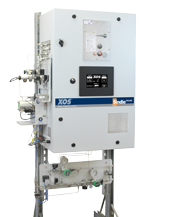
Sindie® Online is an industrial grade process sulphur analyser with breakthrough detection capability to monitor ultra-low sulphur in biofuels. This process analyser can take a measurement every 30 seconds, enabling refiners to finetune their process control and maximize profits. Powered by MWDXRF®, Sindie Online uses ASTM D7039 technology, the same technology used in Sindie benchtop. Sindie Online offers resilience to feedstock changes and the ability to measure a variety of challenging sample types without the need for significant changes to sample conditioning.
Download Sulphur Family Brochure
CHLORINE SOLUTION
Clora 2XP
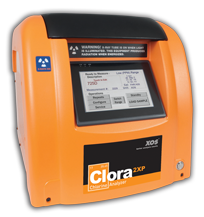
While microcoulometry is a very valid technique for measuring biofuels and clean chemicals, there is a risk of carryover from biofuels with a high boiling point, making Clora 2XP a great addition to your current setup.
Download Clora 2XP Brochure
Looking for a phosphorus or silicon solution?
Phoebe delivers total phosphorus analysis as low as 0.4 ppm in hydrocarbons, biofuels and aqueous matrices. Download the brochure to learn more.
Signal delivers total silicon analysis as low as 0.65 ppm in hydrocarbons and biofuels. Download the brochure here.
Rapid and Accurate Analysis of Sulphur and Chlorine in Biofuels by XRF
XRF delivers rapid and accurate results for testing sulphur and chlorine in biofuels, backed by international standard test methods.
Download our whitepaper to learn about a viable solution to measure both elements concurrently with one instrument.
Download Whitepaper